Why Horror Fans Still Buy Movies on Physical Media
The main reason to buy horror movies on physical media is control. A disc can't be pulled from your library, edited after release, or compressed into blocky mud during a dark scene. Horror feels those problems more than most genres, because so much of it lives in cult, regional, and direct-to-video corners that services rarely license. Even well-known titles rotate out constantly, a churn we track in our guide to horror movies leaving streaming.
Collectors aren't reviving a dead format. They're keeping a smaller one alive. In 2025, U.S. spending on DVD, Blu-ray, and 4K UHD discs fell 9.3% to $870 million, but 4K UHD sales grew 12%, according to the Digital Entertainment Group. The buyers who stayed are enthusiasts, and horror is one of the genres specialty labels lean on hardest.
Key Takeaways
- Buying a digital movie usually gets you a revocable license, and California law has required sellers to disclose that since January 1, 2025.
- A 4K UHD Blu-ray can carry up to 128 Mbps of video data, while major streaming services typically deliver 4K at 15 to 25 Mbps.
- Only about 12% of movies in active distribution are available on the top eight U.S. subscription streaming services, according to Reelgood data.
- U.S. physical media spending fell 9.3% in 2025, but 4K UHD sales rose 12%, which suggests discs are settling into a collector format.
- Physical media is not permanent: disc lifespan estimates vary widely, and consumer VHS tapes begin to degrade within 10 to 25 years.
Is Physical Media Actually Making a Comeback?
Not in the headline sense. Physical media is shrinking more slowly and shifting toward collectors, which is a different story than a comeback. The good news for horror fans is that the part of the market still growing is the premium, collectible part.
The Digital Entertainment Group's year-end report puts 2025 U.S. disc spending at $870 million, down 9.3%. That sounds bad until you compare it to 2024, when disc sales fell 23.4%. The rate of decline was cut by more than half in one year. And 4K UHD, the format collectors buy for restorations, grew 12% after declining almost every year since 2018.
The U.K. shows the same pattern. The Entertainment Retailers Association reported physical video sales down just 4.7% in 2025, the slowest decline since 2010. Blu-ray and 4K UHD combined brought in £84.2 million there, ahead of DVD at £64.7 million.
Read those numbers honestly. Streaming won. Subscription streaming reached $57.5 billion in U.S. spending in 2025, more than 92% of the home entertainment market. Disc sales peaked above $16 billion back in 2005. What survived is a smaller market built around people who care about owning a specific film in a specific version. That describes a lot of horror fans.
Physical Media vs. Streaming: What Horror Fans Actually Get
Streaming wins on convenience and cost per title. Physical media wins on ownership, picture quality, and version control. For horror, those last three matter more than they do for most genres.
| Factor | Streaming | Physical Media |
|---|---|---|
| Ownership | Revocable license or subscription access | You own the disc outright |
| Availability | Titles rotate as licenses expire | Stays on your shelf |
| 4K video bitrate | Typically 15 to 25 Mbps | Up to 128 Mbps on 4K UHD |
| Version control | Can be edited or swapped after release | Fixed at the time of pressing |
| Extras | Rare, and varies by storefront | Commentaries, featurettes, alternate cuts |
| Upfront cost | Low monthly fee | Higher cost per title |
| Convenience | Instant, no extra hardware | Needs a player and shelf space |
Buying Digital Usually Means Licensing
When you "buy" a movie on a digital storefront, you usually get a license to watch it, not the movie itself. California made that explicit with AB 2426, which took effect January 1, 2025. Sellers who use words like "buy" or "purchase" now have to disclose that the transaction is a license, and that access can be revoked if the seller loses the rights. A disc on your shelf doesn't come with that clause.
Why Do Dark Horror Scenes Look Worse on Streaming?
Horror lives in the dark, and darkness is where compression struggles most. Streaming services squeeze video to fit home internet speeds, so 4K streams typically arrive at 15 to 25 Mbps. A 4K UHD Blu-ray can run up to 128 Mbps, and even a standard 1080p Blu-ray reaches about 40 Mbps. That extra data shows up as cleaner shadows, smoother gradients, and less banding, the stair-step effect you see when a dark hallway breaks into visible stripes of gray.
It also protects texture. Film grain, fog, and the fine detail of practical effects craftsmanship are exactly what heavy compression smears first. If a latex transformation scene ever looked like a smudge on a stream, bitrate is usually why.
Streaming Doesn't Keep Horror's Deep Cuts
Most movies aren't on the big streaming services at all, and horror's cult and regional titles are some of the least likely to show up. For a lot of the genre, a disc or a tape is the only legal way to watch.
How Much of Film History Can You Actually Stream?
Less than most people assume. Reelgood's streaming data puts roughly 12% of movies in active distribution on the top eight U.S. subscription services. That's about 34,000 of more than 280,000 titles. The same data shows about 45% of movies in its global database can't be streamed in the U.S. under any model: subscription, free with ads, or rental.
Horror's back catalog is especially exposed. Direct-to-video slashers, shot-on-video oddities, and regional productions often have murky rights, small audiences, or no restored master to license. Some sit one bad storage unit away from joining the lost horror films that survive only as stills and rumors.
Streaming Originals Can Vanish Too
Owning the service doesn't protect a title. In 2023, Disney+ pulled its own original series Willow less than a year after it premiered, and Netflix has removed a string of its own originals over the years. When a streaming-only film never gets a disc release, removal can mean it stops being legally available anywhere.
That's why the archive gives overlooked hidden gems a permanent shelf. A recommendation only helps if people can still find the film.
Discs Lock In the Version You Chose
A stream can be edited after release. A disc can't. Horror has more alternate cuts, rating fights, and restoration debates than almost any genre, so version control matters.
Streaming files get swapped without notice. In 2023, viewers noticed that The French Connection, the 1971 Best Picture winner, was streaming on the Criterion Channel with a brief scene trimmed. The edit appeared without an announcement. Horror is more exposed to this, because so many titles exist in several versions: theatrical and unrated cuts, TV edits, international prints, and releases trimmed during the U.K.'s 1980s "video nasties" panic.
Boutique discs often include several cuts on one release, so you can compare them yourself. Some even add alternate versions that remove real animal cruelty, which matters if you've read about animal harm in older horror. Extras belong here too. Commentary tracks and effects featurettes rarely reach streaming storefronts, and for practical effects fans a good commentary works like a free masterclass.
Horror VHS, DVD, and Blu-ray Collecting: Which Format Fits You?
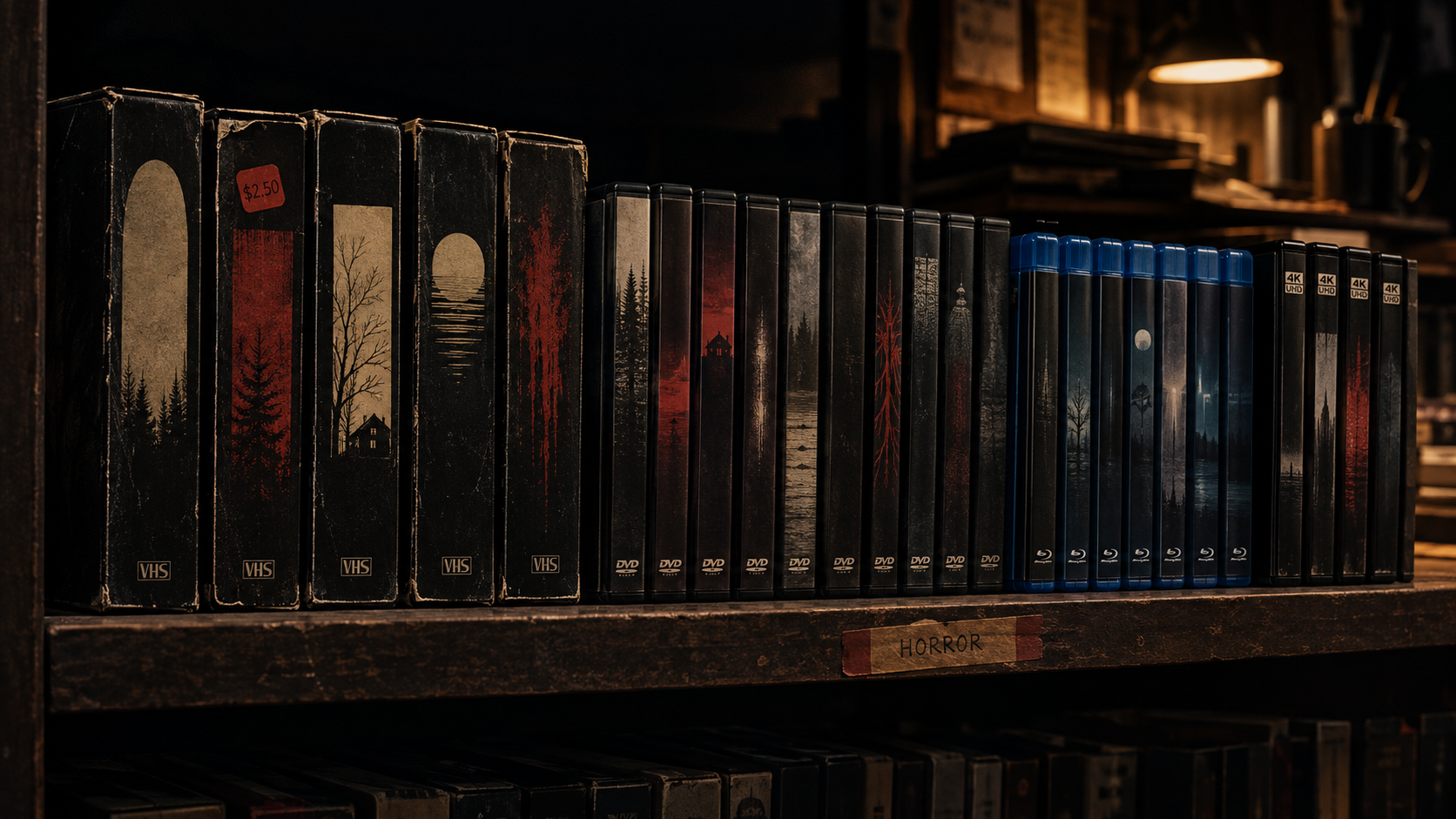
Each format serves a different kind of collector. Blu-ray and 4K UHD are for watching films at their best. VHS is about the object and the era. DVD is the budget layer that still holds titles nobody has upgraded.
| Format | Best For | Tradeoffs |
|---|---|---|
| VHS | Original big box art, first releases, shot-on-video titles never reissued | Low picture quality, tapes degrade, players are aging |
| DVD | Cheap entry point, out-of-print titles with no HD release | Standard definition only |
| Blu-ray | Restorations and extras at the best value for most collectors | Costs more than DVD |
| 4K UHD | Maximum detail and HDR for dark, grain-heavy films | Highest price, smaller horror catalog, needs a 4K player |
Why Horror VHS Collecting Is About the Object
Nobody buys an original horror VHS for the picture. They buy the artifact. Early rental-era horror came in oversized big box packaging with lurid painted art, small print runs, and labels that vanished decades ago. Most of those tapes were rented until they wore out, so clean survivors are scarce.
The top of that market is serious money. A factory-sealed, professionally graded first release of A Nightmare on Elm Street sold for $15,000 on October 31, 2022, according to the grading company CGC. Most used tapes are worth a few dollars, though. The real draw for most collectors is the stuff that never got a second life, the same instinct that keeps cult horror classics worth revisiting decades later.
Horror Blu-ray Collecting and the Boutique Label Boom
Most of the energy in horror collecting now runs through boutique labels, small distributors that license cult and forgotten films and give them collector-grade releases. Companies like Vinegar Syndrome, Severin Films, Arrow Video, and Second Sight scan films from the best surviving elements and add new extras, essays, and artwork. Some of these movies looked rough for decades because their only home release was a worn tape transfer. A fresh scan can make them look like different films.
That's also why limited editions sell out fast. Print runs are small, and once a license expires, a release can go out of print for good.
Where DVD Still Earns Shelf Space
DVD keeps getting written off, and it keeps selling. For horror collectors it fills a specific gap: plenty of obscure titles got a DVD release in the 2000s and never received an HD upgrade. If that disc is the best version that exists, it's worth owning. Used DVDs are also the cheapest way to find out whether collecting is for you.
How Long Does Physical Media Actually Last?
Longer than a streaming license, but not forever. Disc lifespan estimates vary widely, and archivists are upfront that reliable numbers don't exist. Storage matters more than format.
Factory-pressed DVDs and Blu-rays are more stable than discs burned at home. Published estimates for pressed discs run from about 10 to 20 years on the conservative end to 100 years on the optimistic end, depending on the source, the disc, and how it's stored. The failure collectors worry about is disc rot, when the reflective layer oxidizes or the plastic degrades until the disc won't play.
VHS is more fragile. Consumer tapes begin to degrade within 10 to 25 years, and older tapes face oxide shedding and mold, especially after heavy playback. If you own a rare tape, treat it like the last copy, because it might be. Five habits protect a collection:
- Store discs upright in their cases, not stacked flat.
- Avoid heat, sunlight, and humidity. Attics, garages, and damp basements are the worst spots.
- Handle discs by the edges and center hole to keep oils off the playing surface.
- Keep VHS tapes vertical and fully rewound, and play them only in a clean, working deck.
- Spot-check rare titles every few years so you catch rot while a replacement is still in print.
How Do You Start a Horror Movie Collection Without Overspending?
Start with the films streaming is least likely to keep, not the ones it always has. A short test before each purchase keeps a collection focused and affordable. We call it the Shelf Test.
- Is it hard to stream? If a title shows up only as a rental or not at all, it's a strong candidate.
- Does it exist in more than one version? Unrated cuts, restorations, and alternate endings make a disc worth more than a stream.
- Does it live in the dark? Low-light photography and heavy film grain gain the most from disc bitrates.
- Is it cult, regional, or direct-to-video? These titles have the weakest licensing and the smallest print runs.
- Will you rewatch it? A disc you pull out every October for a decade pays for itself.
Franchises are an easy place to find value, since box sets often bundle every entry with extras. Our horror franchise timelines lay out each series in order, so you can see which sequels actually deserve shelf space.
For everything else, check the verdict before a blind buy. Every film in the HorroRated movie archive carries a score from 0 to 5, from Skip It to Legendary, so you know whether a risky purchase is worth it.
What Physical Media Can't Do
Physical media isn't the right call for every film or every fan. It costs more, takes space, and depends on hardware that's getting harder to buy.
A new 4K UHD release often costs more than a month of a streaming subscription. Big retail has pulled back too: Best Buy stopped selling DVDs and Blu-rays in 2024, and several manufacturers have discontinued their disc players. Discs also degrade, as covered above. Streaming is still the easiest way to try a movie you're unsure about. For most horror fans the practical answer is both. Stream to discover. Buy what you'd miss.
The Video Store Instinct Behind HorroRated
HorroRated runs on the same idea that drives physical media: good horror deserves a permanent shelf. We don't sell discs. We're an archive.
The best part of an independent video store wasn't the inventory. It was the person behind the counter who pointed you toward something strange on the back wall. Streaming swapped that person for a row of whatever is trending this week. HorroRated tries to bring the counter back with hand-picked films, clear verdicts, and context on why a movie matters. Here's more on what HorroRated is built to do. Collecting keeps the films. The archive keeps the reasons they matter.
Frequently Asked Questions About Buying Horror on Physical Media
Is it worth buying horror movies on physical media?
For titles you rewatch, can't reliably stream, or want in the best possible quality, yes. Physical media gives you permanent access, higher-bitrate video, and extras that rarely reach streaming. For a movie you're only curious about, streaming or renting first is the cheaper test.
Is physical media making a comeback?
Not in overall sales. U.S. spending on DVD, Blu-ray, and 4K UHD fell 9.3% in 2025 to $870 million, according to the Digital Entertainment Group. But 4K UHD sales grew 12% that year, and the decline was less than half the size of 2024's 23.4% drop, which points to a stable collector market.
Do you own a digital movie you buy online?
Usually not. Most digital storefronts sell a license that can be revoked if the seller loses the rights to the film. California's AB 2426, in effect since January 1, 2025, requires sellers who use words like "buy" to disclose that the purchase is a license.
Does Blu-ray look better than 4K streaming?
In most cases, yes. A 4K UHD Blu-ray can carry up to 128 Mbps of video data and a 1080p Blu-ray about 40 Mbps, while major 4K streams typically run 15 to 25 Mbps. The difference shows most in dark scenes, fog, and film grain, which is why it matters for horror.
How long do DVDs, Blu-rays, and VHS tapes last?
There's no reliable single number. Estimates for factory-pressed DVDs and Blu-rays range from about 10 to 20 years to as much as 100 years, depending on the source and storage conditions. Consumer VHS tapes begin to degrade within 10 to 25 years, and cool, dry, dark storage extends the life of every format.
Why are some horror VHS tapes worth money?
Scarcity drives the price. Early 1980s horror often came in big box packaging with small print runs, and most copies were rented until they wore out. A factory-sealed, graded first release of A Nightmare on Elm Street sold for $15,000 in 2022, but most used horror tapes sell for only a few dollars.
What format should a new horror collector start with?
Blu-ray is the best starting point for most people. It offers restored picture, extras, and a deep horror catalog at a reasonable price, and 4K UHD players also play standard Blu-rays. DVD fills gaps for titles with no HD release, and VHS works best as a separate hobby built around packaging and history.