
What Is Body Horror, and Where Did the Name Come From?
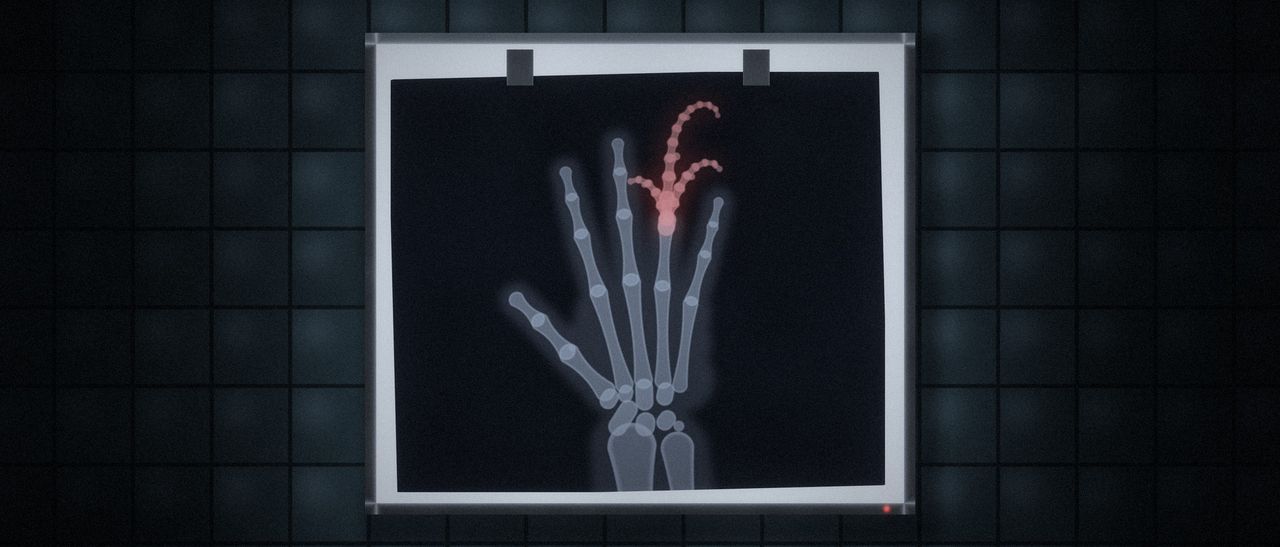
Body horror is horror that comes from inside: the scares come from a human body changing, rotting or being taken over, usually in ways its owner can't stop. Disease, parasites, mutation, surgery and transformation are its tools, and the fear is less about dying than about no longer recognizing your own flesh. HorroRated's shelf of curated body horror movies holds 91 titles, from Invasion of the Body Snatchers (1956) to films and games from 2026.
Also known as: biological horror; "body-horror" (as first printed in 1983).
On this page
Got a question or a horror pick for us?
Contact HorroRatedKey Takeaways
- Body horror is horror built on the human body changing, decaying or being taken over, usually beyond its owner's control.
- Critic Philip Brophy named it "body-horror" in a 1983 essay, and the British film journal Screen's 1986 Body Horror issue made critics take the term seriously.
- The idea is older than the name, from Mary Shelley's Frankenstein (1818) to Hammer's The Quatermass Xperiment (1955).
- David Cronenberg's films from Shivers (1975) to The Fly (1986) set the template, though he rejects the "king of body horror" label.
- It's booming again: 28 of the 91 titles on HorroRated's body horror shelf came out in the 2020s, more than any other decade.
Where Does the Name Body Horror Come From?
From Philip Brophy, an Australian critic and filmmaker, who wrote about "body-horror" in a 1983 essay. The fear it describes is much older.
Brophy's essay "Horrality" appeared in the Melbourne journal Art & Text in 1983. He argued that the new horror films played "not so much on the broad fear of Death, but more precisely on the fear of one's own body, of how one controls and relates to it." In 1986 the British film journal Screen reprinted it in an issue titled Body Horror, next to Barbara Creed's essay on the "monstrous-feminine", and that issue is where critics started taking the term seriously. Brophy later made a body horror film himself: Body Melt (1993).
The idea came first. Mary Shelley's novel Frankenstein (1818) grew out of early-1800s talk about galvanism and the origins of life, and a 2025 retelling by Guillermo del Toro now sits on HorroRated's body horror shelf. On screen, Hammer's The Quatermass Xperiment (1955) followed an astronaut whose fingerprints dissolve and whose bones change shape after a hostile life form gets inside him.
Why Is David Cronenberg Called the King of Body Horror?
Because his early films set the template, but he doesn't accept the title. HorroRated's entry for Shivers (1975), the film that launched his career, says its body horror "is already fully formed", and Scanners (1981), The Fly (1986) and Dead Ringers (1988) followed. Cronenberg has said "My films are sui generis" and blamed the labels on "the need to sell films." When he does explain the idea, he calls it "biological horror": his films are "very body-conscious."
What Kinds of Body Horror Are There?
Most body horror turns on one of five kinds of change, and the kind tells you what a film is really afraid of. The BFI sums up the subgenre as "aberration, mutation, transformation and a loss of conscious control over the human body."
Five kinds of body horror
| Kind of change | What happens to the body | Archive examples |
|---|---|---|
| Transformation | It slowly turns into something else | The Fly (1986); Tusk (2014), where an interview turns into a plan for "transformation in a very literal sense" |
| Infection and parasites | Something gets inside and starts making the decisions | Shivers (1975), a medical experiment loose in a high-rise; Brain Damage (1988), a creature that injects a young man's brain |
| Copies and replacements | Something takes the body's shape and wears it | The Thing (1982); Invasion of the Body Snatchers (1978), where loved ones become "present in body but hollowed out" |
| Mind over matter | Thoughts, pressure or obsession break the body down | Scanners (1981), psychic powers that can destroy a body; Black Swan (2010), a dancer's deterioration filmed as body horror |
| Surgery and self-improvement | The change is chosen, then goes wrong | The Substance (2024), a fading star's wish for a younger self; A Different Man (2024), an experimental procedure that changes a face |
Is The Thing Body Horror or a Creature Feature?
Both, and HorroRated files it under both. A simple test: in a creature feature the monster is the threat, while in body horror the threat is what happens to a human body. The Thing's organism can "perfectly imitate any living thing it absorbs", so it passes both. Brophy wrote in 1983 that The Thing took to "its logical limit" the body horror that Alien (1979) began, and HorroRated agrees: five of the seven Alien films in order, plus the Alien: Earth series, are on its body horror shelf.
Is Body Horror Making a Comeback?
Yes. It never went away, but the 2020s are its busiest decade on HorroRated. Of the 91 titles on the body horror shelf, 28 came out in the 2020s, more than any other decade; the 1990s come next with 17.
The awards caught up too. The Substance (2024) earned five Oscar nominations, including Best Picture, and won Best Makeup and Hairstyling in March 2025. One of the films it beat in that category, A Different Man (2024), also sits on HorroRated's shelf.
The Oscar went to the film's makeup artists, Pierre-Olivier Persin, Stéphanie Guillon and Marilyne Scarselli, and HorroRated's entry calls its third-act practical effects "the most ambitious and disturbing in recent horror." The new wave leans on the same hands-on craft as the 1980s classics, and HorroRated's guide to practical effects in horror explains why that craft ages so well.
Which Films on HorroRated Define Body Horror?
These five archive entries span five decades and four of the five kinds of change. Verdicts are from the live entries, and no line gives away an ending.
- Shivers (1975), Legendary. The film that launched Cronenberg lets a parasite loose in a luxury high-rise; the entry calls it "clinical and political and deeply unsettling." Content note: sexual content.
- The Thing (1982), Highly Recommended. In Carpenter's Antarctic shapeshifter, twelve men can't tell who is still themselves, and Rob Bottin's creature effects remain "some of the most inventive and disturbing" ever filmed.
- The Fly (1986), Legendary. Cronenberg's remake of The Fly turns a campy 1950s premise into "a tragedy about the body failing the person inside it," carried by what the entry calls one of the genre's best performances, from Jeff Goldblum.
- Society (1990), Legendary. Brian Yuzna's class-war satire plays as a slow burn about paranoia until a third act built on Screaming Mad George's effects.
- The Substance (2024), Legendary. Coralie Fargeat's The Substance is about what the beauty industry does to women, and the entry says it refuses "to soften any part of it." Demi Moore's performance "recontextualizes her entire career."
Related Resources
- Why horror fans can't look away
- Aaron Schimberg's A Different Man (2024)
- Gothic horror, where Frankenstein began on screen
Ready for something that gets under the skin? Open HorroRated's Movie Night Generator, set the collection to Body Horror and the decade to the 2020s, and let it pick.
Frequently Asked Questions About Body Horror
Who coined the term "body horror"?
Australian critic and filmmaker Philip Brophy, in his essay "Horrality", published in the Melbourne journal Art & Text in 1983. The British film journal Screen reprinted it in 1986 in an issue titled Body Horror, which spread the term. Brophy later directed his own body horror film, Body Melt (1993).
What is another name for body horror?
Biological horror. David Cronenberg has used that name, explaining that his films are "very body-conscious" rather than focused on technology or the supernatural. Philip Brophy's 1983 essay spelled it "body-horror".
What was the first body horror movie?
No film holds the title for certain, because the name only arrived in 1983 and every earlier "first" is picked in hindsight. Hammer's The Quatermass Xperiment (1955), about an astronaut whose body is slowly changed by a hostile life form, is an early example. Mary Shelley's novel Frankenstein (1818) laid the groundwork in print.
Is Alien a body horror movie?
Yes, as well as science fiction and a creature feature. Philip Brophy wrote in 1983 that The Thing (1982) took the body horror Alien (1979) began to its logical limit. HorroRated files Alien on its body horror shelf, along with four other Alien films and the Alien: Earth series.
Is The Substance body horror?
Yes. Coralie Fargeat's The Substance (2024) takes a fading star's wish for a younger self to grotesque extremes, using practical effects to satirize the beauty industry. It earned five Oscar nominations, including Best Picture, and won Best Makeup and Hairstyling in 2025. HorroRated rates it Legendary.
Are there body horror video games?
Yes. HorroRated's body horror shelf includes five indie games. In Smile More (2026) you perform cosmetic surgery on sedated patients, and in Tiny Chills Not From Ear you clean ears for a living while the town whispers about "grotesque anomalies".