Horror Movie Tropes: 16 Classics, Scream's Rules and Why They Work
Horror movie tropes are the familiar pieces every fan spots a mile off: the final girl, the house with a history, the friends who decide to split up, the killer who isn't quite dead. Most of them were set by slashers, and HorroRated's shelf of curated slasher movies is the best place to watch them done well. Here are 16 classic horror tropes, the rules Scream (1996) made famous before it turns 30 on December 20, 2026, and the films that flip them.
On this page
Got a question or a horror pick for us?
Contact HorroRatedKey Takeaways
- A horror movie trope is a familiar device, like the final girl or the house with a history. It turns into a cliché when a film uses it on autopilot.
- The classic horror tropes fall into four groups: the characters you meet, the places it happens, the scares and bad choices, and the villains.
- Scream (1996) turned the tropes into three survival rules: never have sex, never drink or do drugs, and never say "I'll be right back." Each sequel added rules of its own.
- Not every trope survives a fact check: a 2013 magazine count found a Black character died first in only 5 of 50 horror films with main Black characters.
- The best horror sets up a trope and then breaks it. Scream (1996), Get Out (2017) and Barbarian (2022) are all rated Legendary on HorroRated.
What Is a Horror Movie Trope?
A horror movie trope is a familiar story device that fans recognize on sight: a kind of character, a place, a scare or a bad decision that turns up film after film. Merriam-Webster puts it simply: "a common theme or device (as in the arts)" (source).
Horror leans on tropes because it runs on anticipation: when a character goes to check the basement, you already know something is down there. A trope is a promise the film can keep, delay or break.
Trope vs Cliché: What's the Difference?
A trope is the device; a cliché is the device used without thought. Merriam-Webster defines a cliché as "a hackneyed theme, characterization, or situation" (source), and the line between the two is how much the film cares. The cat scare, a slow build that pays off with something harmless jumping out, is the classic example: the first one makes you laugh at yourself, and the third one makes you check your phone.
A quick test: if you can call the next shot and the film doesn't seem to know it, that's a cliché.
Why Do Horror Movies Keep Using the Same Tropes?
Because they work, they're cheap, and fans enjoy playing along. A trope builds suspense before anything happens: you know the rule, so you dread the moment someone breaks it. That tug between dread and release is a big part of why a safe scare feels so good.
They're also shorthand for small budgets: Halloween (1978) and Friday the 13th (1980), both rated Legendary on HorroRated, were made for almost nothing. And part of the pleasure is the game: calling who goes next, and being right.
16 Classic Horror Movie Tropes Every Fan Knows
These are the 16 tropes that turn up most across the genre, grouped by what they do: who you meet, where it happens, the scares and bad choices, and who's coming for you. Each one comes with a film from HorroRated's archive that shows it well.
Character Tropes: Who You Meet
- The final girl. The last one standing, usually the friend who notices the danger first and keeps her head. Film scholar Carol J. Clover gave the final girl her name, and Halloween (1978) is where the formula took shape.
- The warner nobody believes. Someone tells the newcomers to turn back and gets laughed off. In Friday the 13th (1980), every warning about Crystal Lake gets dismissed as local superstition.
- The creepy kid. A child who knows too much or stares too long. The Omen (1976), rated Legendary, is built around a diplomat who comes to fear the boy he's raising.
- The grown-ups who won't listen. Parents and police wave the warnings away. A Nightmare on Elm Street (1984) builds its first half on a teenager who knows what's happening and can't get anyone to believe her.
Place Tropes: Where It Happens
- The house with a history. The family moves in; the past never left. The Amityville Horror (1979) and Poltergeist (1982) are the classics, and HorroRated's shelf of haunted house horror movies holds 24 picks.
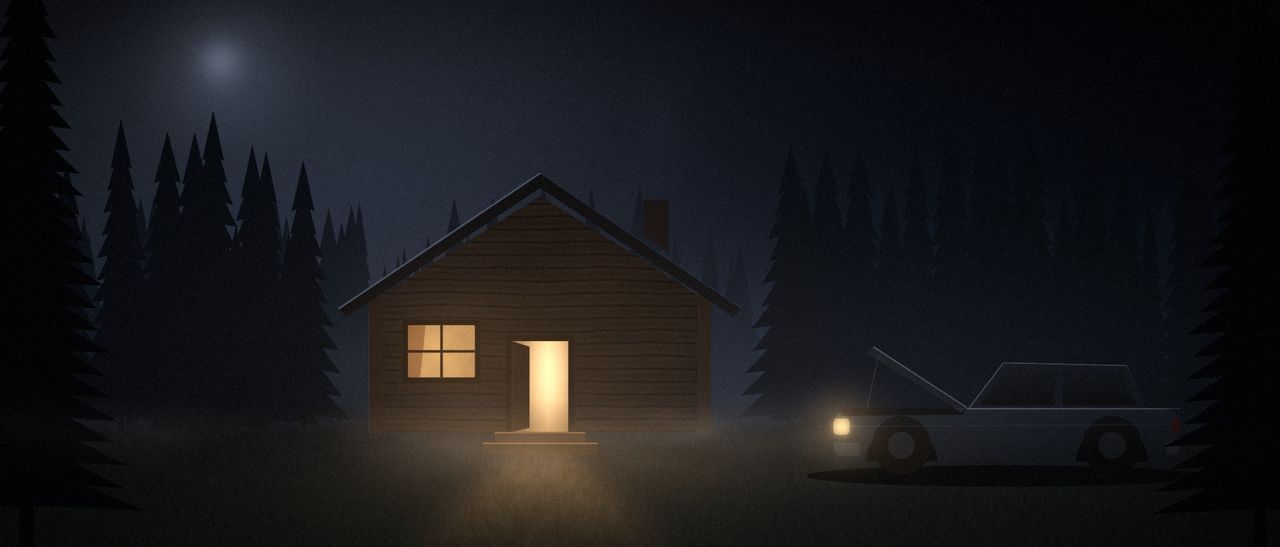
- The cabin in the woods. Friends, a weekend away and no neighbors for miles. The Evil Dead (1982) is the template: an isolated cabin and something waiting in the trees.
- The phone that won't work. No signal, a dead line, a battery about to die. One line of dialogue cuts everyone off from help.
- The basement nobody should go down to. Whatever starts the trouble is usually downstairs, and somebody always goes to look. In The Evil Dead, it begins with a recording found in the cellar.
Scare and Choice Tropes: What They Do
- "Let's split up." The group divides to cover more ground, and the killer gets to work one at a time.
- The jump scare and the cat scare. A sudden jolt after near silence, and its fake-out cousin, where the build-up ends with something harmless. Horror's most famous cat is in Alien (1979).
- The car that won't start. The keys drop, the engine coughs, the headlights appear in the mirror. It's the oldest way to stop a character from leaving.
- "I'll be right back." The line that guarantees the speaker won't be. Scream gave it a rule of its own.
Villain Tropes: Who's Coming
- The masked, silent killer. No face, no words, no explanation. Halloween (1978) gave horror one of its most enduring, blank-faced villains.
- The killer who walks and still catches up. The victim sprints, the killer strolls, and somehow the gap never grows. It's absurd, and it still works because it feels inevitable.
- The monster with rules. Don't fall asleep. Don't watch the tape. Don't cheat death. A Nightmare on Elm Street (1984), The Ring (2002) and Final Destination (2000) give you the rule up front, so you dread every moment it might be broken.
- It isn't dead yet. The threat goes down, everyone breathes out, and there's one more jolt before the credits. It's horror's favorite goodbye.
Which Horror Tropes Still Work, and Which Are Worn Out?
A trope still works when the film makes you afraid of it all over again. It's worn out when it only exists to move the plot along, like the dead phone or the group that splits up for no reason. Here's where HorroRated lands on the big ones.
| Trope | Why it works, or doesn't | HorroRated's take |
|---|---|---|
| The final girl | Gives you one person to ride the fear with | Still works, best when the film plays with who she'll be |
| The house with a history | The past explains the haunting and traps the family | Still works, scarier when the history stays half told |
| The monster with rules | You know the rule, so you dread every chance to break it | Still works |
| The jump scare | A sudden jolt after near silence | Works when earned, cheap when it's just a loud noise |
| The cat scare | A fake-out that releases the tension, then resets it | Fine once, tired as the only trick |
| "Let's split up" | Separates the group so the killer can work one at a time | Worn out unless the film gives a reason |
| The phone that won't work | Cuts everyone off from help | Worn out; most films now say it and move on |
| The killer isn't dead | One last jolt before the credits | Worn out as a twist, still fun as a franchise wink |
The jump scare is the best test case: cheap when it's a loud sting with nothing behind it, great when the film has already made you afraid of the room. That's the difference between noise and a jolt the film has earned.
Scream's Rules for Surviving a Horror Movie
Scream (1996) lays out three rules for surviving a horror movie: you can never have sex, you can never drink or do drugs, and you should never say "I'll be right back," because you won't be back. Randy, the video store clerk played by Jamie Kennedy, explains them to a room full of friends at a party, and fans have been quoting them ever since (source).
What made it matter: director Wes Craven and writer Kevin Williamson gave us characters who had seen every slasher, so the tropes stopped being background and became the plot. HorroRated rates Wes Craven's self-aware 1996 slasher Legendary and a HorroRated Pick.
Scream opened in the US on December 20, 1996 (source), so it turns 30 this December. For an anniversary rewatch, the rules make a good checklist; we won't say who keeps them.
How Did the Rules Change in the Sequels?
Every Scream sequel brings a new rules speech for the kind of movie it is: a sequel, the last part of a trilogy, a reboot and, finally, a "requel" (source).
| Film | The kind of movie it is | The rules |
|---|---|---|
| Scream (1996) | A slasher | No sex, no drinking or drugs, and never say "I'll be right back" |
| Scream 2 (1997) | A sequel | A higher body count, more elaborate deaths, and anyone can die |
| Scream 3 (2000) | The last film of a trilogy | Rules for the final chapter of a trilogy |
| Scream 4 (2011) | A reboot | New rules for a reboot |
| Scream (2022) | A "requel" | Rules for surviving a sequel that's partly a reboot |
The requel joke is the franchise at its most self-aware: Scream (2022) shares the original's title but is a sequel set 25 years later. Release order is also story order, so HorroRated's guide to every Scream movie in order makes a marathon easy to plan.
Are Horror Movie Tropes Actually True?
Some tropes hold up and some are more joke than rule. Two of the most repeated are worth a check.
"The Black character always dies first." It's one of horror's best-known jokes, but it doesn't hold up as a rule. When Complex looked at 50 horror films with main Black characters in 2013, a Black character died first in only 5 of them (source). That's one magazine's informal count rather than a study, so treat it as a reality check, not the final word.
"Have sex and you die." This is the pattern critics have read into slashers for decades. Film scholar Carol J. Clover's Men, Women, and Chain Saws, first published in 1992, studied slasher films and their final girls (source), and part of what set her final girl apart from her friends was that she held back. Scream then made the pattern rule number one, the surest sign a trope has gone from subtext to punchline.
Horror's favorite numbers get the same reality check in our horror movie statistics, from the claim that a scary movie burns 200 calories to which film really holds the box office record.
Horror Movies That Flip the Tropes
Subverting a trope means setting it up so you expect it, then doing something else. Here are six on HorroRated that know the rules as well as you do, all spoiler-free:
- Wes Craven's New Nightmare (1994), Recommended: horror about a horror franchise, two years before Scream, with Freddy reaching into the real world of the people who made him.
- Get Out (2017), Legendary: a meet-the-parents weekend gone wrong, Jordan Peele's feature debut, with a Black lead at the center of the story instead of at its edges.
- Barbarian (2022), Legendary: the setup is pure trope (a stranger, a rental, a basement), but Barbarian's double-booked rental keeps changing what kind of movie it is. Content note: violence, sexual content and disturbing themes.
- X (2022), Legendary: Ti West's slasher understands the tradition from the inside and toys with who the genre usually lets live.
- Shaun of the Dead (2004), Legendary: a zombie comedy that works just as well as a real zombie film, which is the whole trick.
- Bodies Bodies Bodies (2022), Highly Recommended: a one-location horror comedy where the scares come from how a group of friends behaves under pressure.
Related Resources
- Why masks and rules make villains scarier: what the best horror villains have in common
- Every Halloween movie in order: the masked-killer franchise, film by film
- Horror comedies that poke fun at the genre: 105 picks that know the tropes and laugh at them
Where to Go Next
Got a favorite trope, or one you love to hate? Let HorroRated's Movie Night Generator pick a film for tonight, and count how many of the 16 you can spot before the credits.
Frequently Asked Questions About Horror Movie Tropes
What are the most common horror movie tropes?
The most common horror movie tropes include the final girl, the jump scare, the group that splits up, the house with a history and the killer who isn't really dead. Most fall into four groups: the characters you meet, the places it happens, the scares and bad choices, and the villains.
What are the three rules for surviving a horror movie?
In Scream (1996), Randy lays out three rules: you can never have sex, you can never drink or do drugs, and you should never say "I'll be right back." The joke is that the film's characters know the rules because they've seen every slasher.
What should you never say in a horror movie?
"I'll be right back." It's the third of Randy's rules in Scream (1996), because whoever says it won't be back. "Let's split up" is a close second.
What's the difference between a trope and a cliché?
A trope is a familiar device, like the final girl or the cabin in the woods. A cliché is the same device used without thought, so it feels tired instead of scary.
What are the most overused horror tropes?
In HorroRated's view, the most worn-out tropes are the phone that won't work, the group that splits up for no reason, the cat scare used as the only trick and the killer who comes back one last time just because. They keep turning up because they're quick ways to move a plot along.
What is a subverted trope in horror?
A subverted trope is one a film sets up so you expect it, then breaks. Scream (1996) does it by giving its characters the same knowledge of horror movies the audience has, so the scares come from the rules you both know.
What are common horror villain tropes?
Common horror villain tropes include the masked, silent killer, the killer who walks but still catches up, the monster that follows strict rules and the villain who isn't dead when everyone thinks it is. The rules trope is scariest when the film explains the rule early and makes you dread every chance to break it.